Stop Guessing
Start Leading with Data
Most "people problems" are actually hidden system and fit problems. Use research-backed assessments to get a clear, objective picture of how your team is wired, so you can stop guessing and start making confident decisions about your structure and leadership.
Most business problems are diagnosed as “people problems,” when they are really system and fit problems. Our assessments give you a clear, shared picture of how your leaders and teams are wired, how they communicate, and where friction is coming from.
We turn data into decisions you can actually use in your day‑to‑day operations.
What You Will Discover
Stop looking at your organization through a lens of frustration. Get the objective data you need to understand exactly what is happening beneath the surface of your business.
The Insights
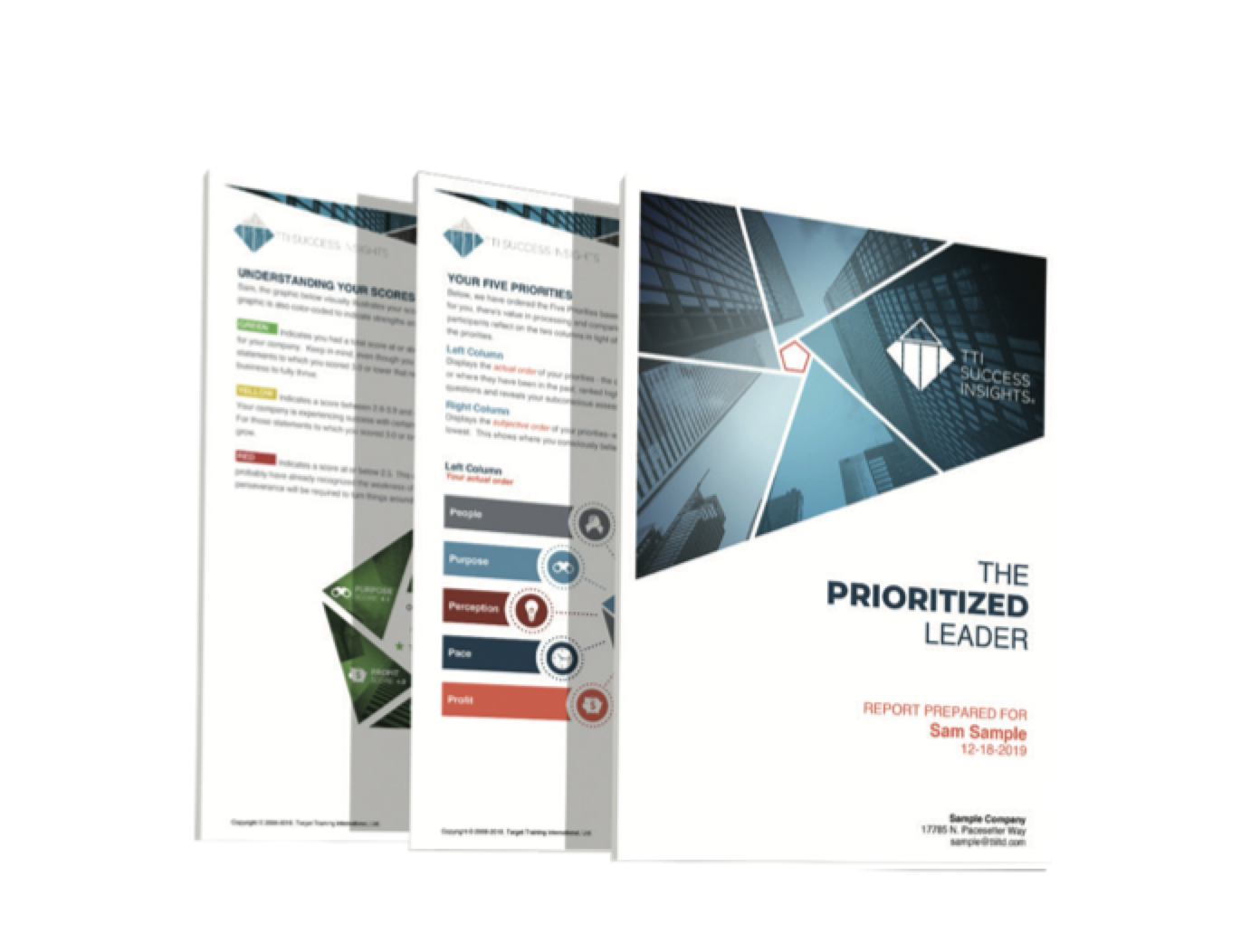
Performance Under Pressure: Understand how your leaders actually make decisions when things get tense.
The "Right Seat": Identify who is in the right role, and who would drive more impact elsewhere.
Growth Alignment: See clearly if your current structure can actually support your 3-year goals.
Schedule Your Discovery Call!
Frequently asked questions
About Our Assessment Tools
DISC is a behavioral assessment that shows how people naturally prefer to communicate, make decisions, and respond to pressure. It does not label anyone as good or bad—it reveals patterns.
When your team understands each person’s style, it becomes easier to:
- Delegate the right work to the right people
- Give feedback in a way others can actually hear
- Reduce misunderstandings and conflict
- Put people in roles that fit how they are wired
We use DISC to give your leaders and teams a shared language for how they work together.
DISC describes how someone tends to behave. EQ (emotional intelligence) measures how well someone understands and manages emotions, their own and others’.
In practice:
- DISC = “Here is how I naturally act and communicate.”
- EQ = “Here is how I notice, manage, and respond to emotions in myself and others.”
A leader with strong EQ can adapt their behavior based on what the situation and people around them need, not just what feels natural. We often use DISC and EQ together to give a fuller picture of leadership strengths and growth areas.
Assessments are especially helpful when:
- You are considering promotions or leadership changes
- You see culture or communication issues but cannot quite name them
- You are restructuring or growing quickly and need clarity on roles
- You want to make more confident hiring and development decisions
In short: use assessments when guessing is too risky or too costly.
Solution: DISC Assessment
Miscommunication usually happens when different behavioral styles clash. The DISC Assessment decodes how people naturally communicate, process information, and approach conflict across four dimensions: Dominance, Influence, Steadiness, and Compliance.
By revealing these behavioral tendencies, DISC gives teams a shared language to adapt their communication styles, resolve friction, and collaborate seamlessly without requiring constant management intervention.
Solution: DISC Assessment
Standard interviews often miss how someone reacts when stress hits. DISC evaluates both Natural (baseline) and Adapted (workplace-adjusted) behaviors.
This highlights potential stress responses: such as becoming overly blunt, hesitant, or reactive; allowing leaders to make smarter hiring decisions and prepare managers to handle high-stakes environments effectively.
Solution: EQ Assessment
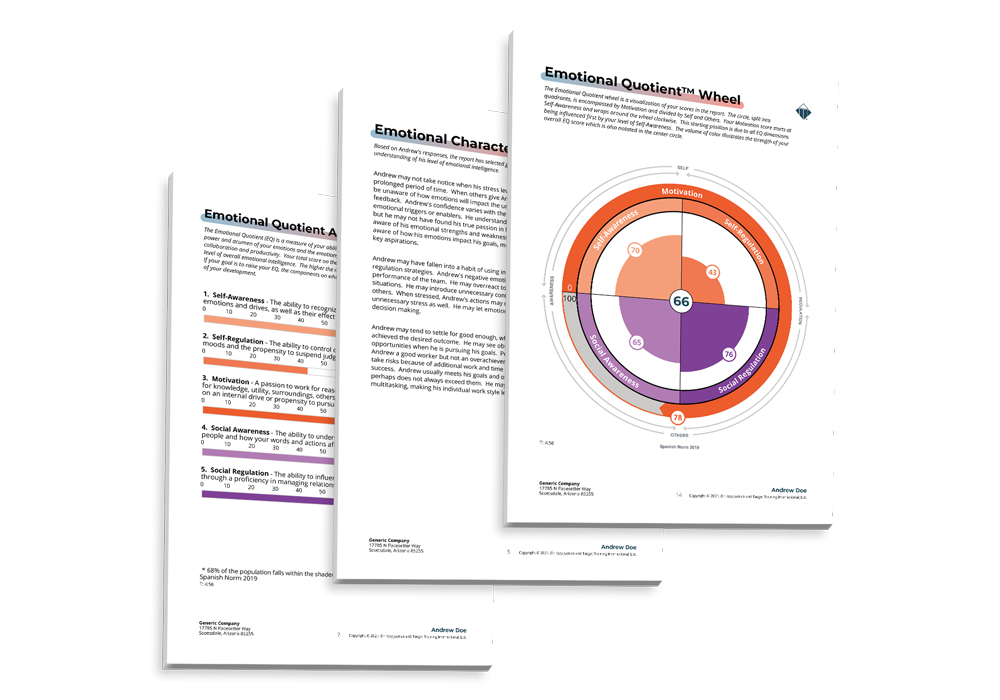
Technical expertise gets managers promoted, but emotional intelligence determines their leadership success. The EQ Assessment measures five core dimensions of emotional intelligence: Self-Awareness, Self-Regulation, Motivation, Empathy, and Social Skills. It exposes blind spots in technical leaders, giving them a clear roadmap to move from command-and-control tactics to empathetic, high-impact leadership.
Solution: EQ Assessment
Burnout and toxic team cultures stem from low emotional regulation during stressful periods. An EQ Assessment equips leaders to identify emotional triggers in themselves and others. Leaders learn to manage stress constructively, respond rather than react, and create an atmosphere of psychological safety where employees feel supported and engaged.
Solution: TTI DNA® Assessment
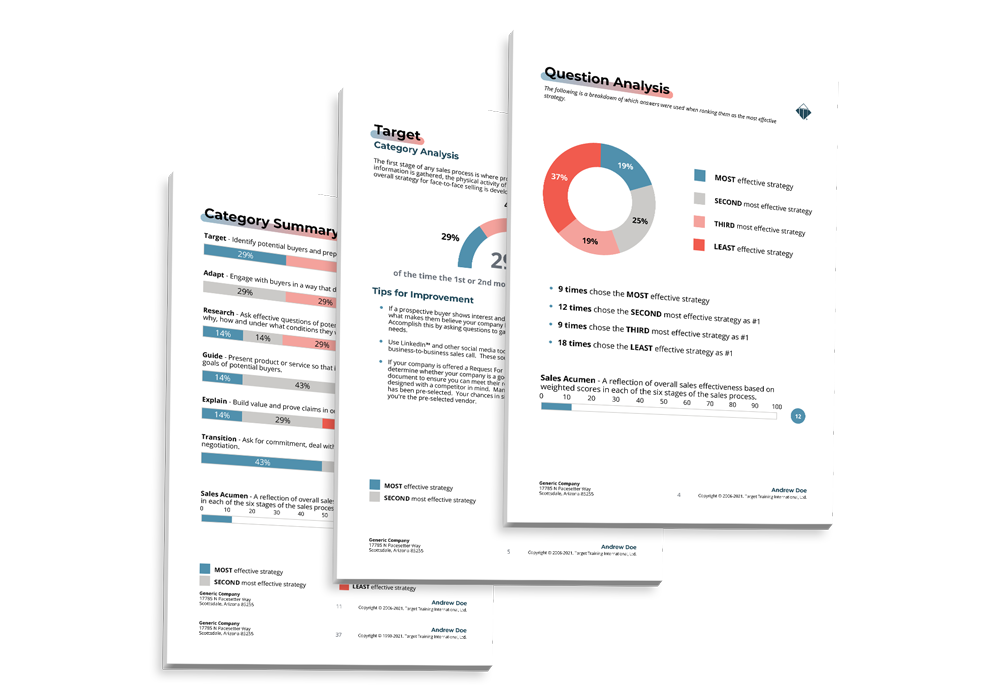
Soft skills are historically difficult to quantify, often leading to subjective promotions. The TTI DNA® Assessmentobjectively evaluates 25 core professional competencies: including Negotiation, Decision Making, Accountability, Time Management, and Strategic Thinking.
It provides clear, actionable data on where an employee’s soft skills stand today and where development is needed for future roles.
Solution: TTI DNA® Job Benchmarking
Hiring or promoting based solely on a resume often leads to costly mishires. By pairing TTI DNA® with Job Benchmarking, you can map the exact competencies required for a specific role and compare them directly against a candidate’s natural skill set.
This eliminates gut-feeling bias and ensures alignment between human capability and job expectations.
Solution: The Complete TriMetrix® Assessment Suite (DISC + EQ + DNA)
Disengagement is rarely caused by a single issue; it is usually a mix of poor communication, stress burnout, or skill-role mismatch.
DISC identifies if they are experiencing behavioral friction with managers or peers.
EQ reveals if they are feeling emotionally drained or unheard.
TTI DNA® checks if their day-to-day tasks align with their core competencies or if they feel underutilized.
Using all three tools together provides a 360-degree view to diagnose the root cause of turnover and implement precise retention strategies.
Solution: Stress Quotient® Assessment
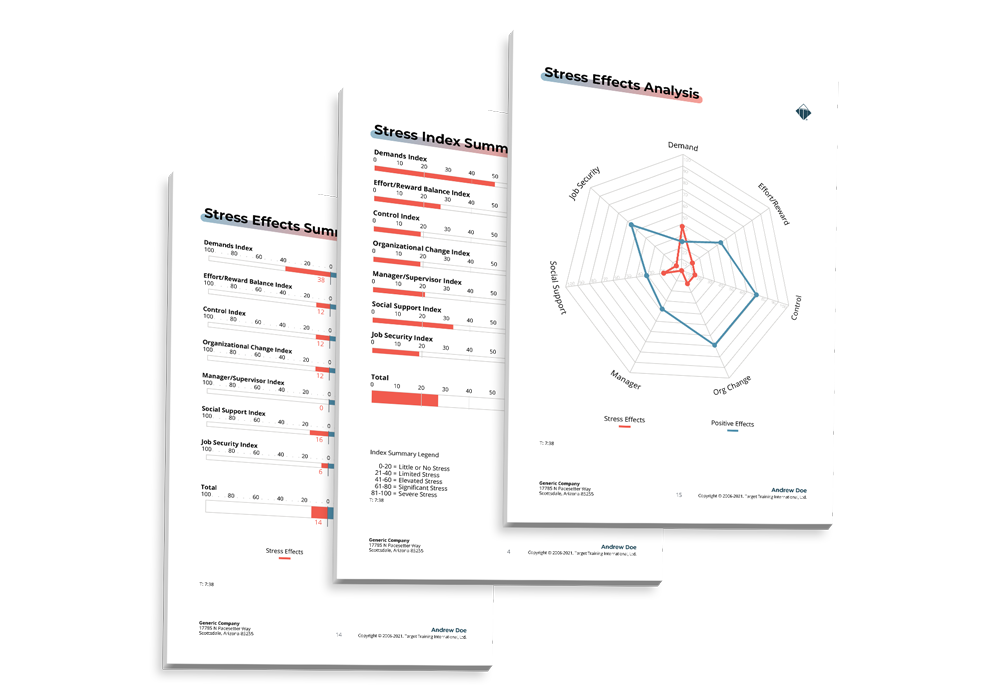
Looks can be deceiving. High activity often masks silent burnout, anxiety, and exhaustion that chip away at performance. The Stress Quotient® Assessment serves as an organizational diagnostic tool that uncovers hidden workplace stressors across seven core dimensions: Demands, Effort/Reward Balance, Control, Organizational Change, Manager/Supervisor, Social Support, and Job Security.
By identifying the precise root causes of burnout, leaders can intervene before productivity collapses.
Solution: Stress Quotient® Group & Anonymous Reports
When employees are overwhelmed, they rarely speak up openly due to fear or discomfort. Stress Quotient® offers anonymous team and organizational reports that aggregate data across departments.
This allows executive leadership to take a "stress pulse" of the organization, separating isolated individual performance issues from systemic culture risks like poor change management, toxic team dynamics, or unmanageable workloads.
We use assessments with:
- Owners and executives
- Department and field/office leaders
- Key individual contributors and emerging leaders
- Sometimes full teams, when culture and communication are a major focus
We will recommend who should be included based on your goals and budget. Sometimes we start with a small group and expand once we see the impact.
Most assessment projects take 2–4 weeks from start to finish, depending on how many people are involved.
Typical timing:
- 1–2 days to confirm goals and participants
- 1–7 days for participants to complete their online assessments
- 1–2 weeks to schedule and deliver debrief sessions with you and your team
If you have a tighter timeline, we can discuss what is realistic.
We are very clear that:
- No style is better than another
- Results describe preferences, not potential
- Assessments are a starting point for conversation, not a final verdict
We train leaders to use insights to support growth and better communication, not to excuse poor behavior or limit someone’s opportunities.
Yes. Our work goes far beyond sending you PDFs.
We can help you:
- Redesign roles and reporting lines based on strengths
- Improve hand‑offs and communication between departments or teams
- Build leadership development plans for current and emerging leaders
- Facilitate team workshops to turn insights into new habits
The goal is always practical, lasting change, not a one‑time exercise.
Both.
- Some clients start with assessments only to gain clarity before making big decisions.
- Others include assessments as part of a broader engagement (leadership development, process creation or fractional integrator work).
We will recommend the right level based on where you are and what you need right now.